Radical Self-Love as a Community-Based Practice
Hope Austin ’25
Faculty Mentor: Dr. VanValen
What is the broader impact of your summer research? That is, why should the world care about your work?
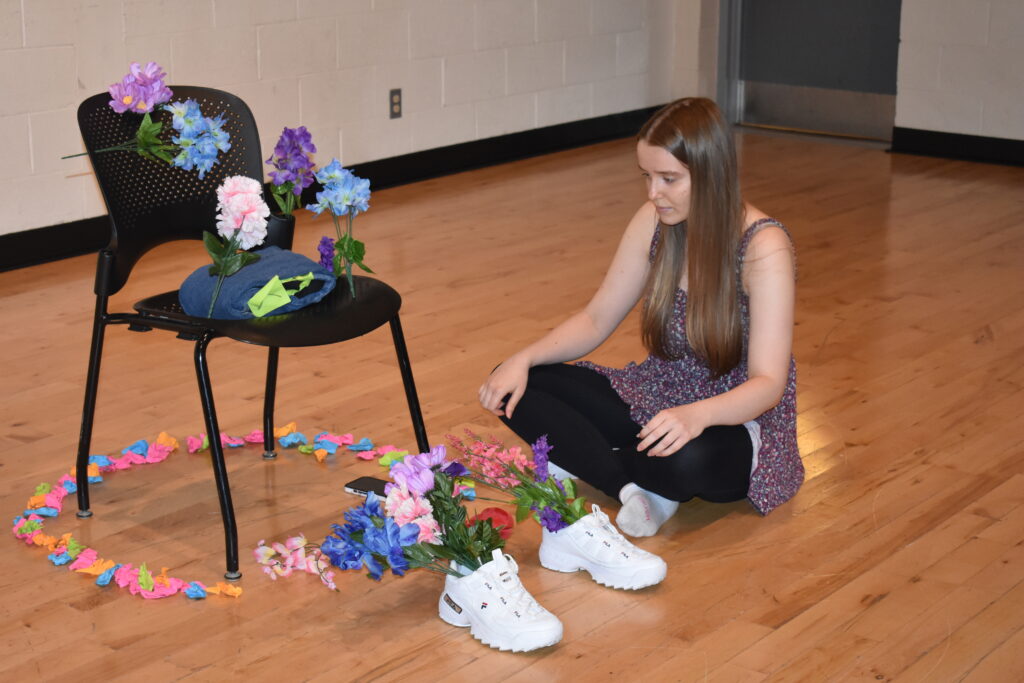
I was inspired by a particular quote, from Sonya Renee Taylor’s book The Body Is Not An Apology: The Power of Radical Self-Love: “It is through our own transformed relationship with our bodies that we become champions for other bodies on our planet. As we awaken to our indoctrinated body shame, we feel inspired to awaken others and to interrupt the systems that perpetuate body shame and oppression against all bodies … When we act from this truth on a global scale, using the lens of the body, we usher in the transformative opportunity of radical self-love, which is the opportunity for a more just, equitable, and compassionate world for us all.” (Taylor 5) I was interested in the proposition of a bidirectional relationship between self-love and community-based love. I asked: Is a person’s capacity for radical self-love tied to their capacity to love humanity more largely? To love/locate themselves within community? I localized the larger questions into a more specific one, explicitly tied to my particular experience: If I can actively love the bodies that sustained mine within lineage, locating myself as a biological echo existing infinitely within particular communities, can I augment my own capacity for self-love?
What has summer research taught you about yourself and the field that you researched and/or studied?
Given the nature of my research, I spent most of the summer in a state of intense self-reflection. I learned that I have more capacity for vulnerability than I had realized. I learned to trust myself and the communities I locate myself in. I learned that I am capable of constructing a substantial and effective performance piece, a goal I have had for quite some time now. I learned, firsthand, that there is a serious learning curve when embracing a practice-as-research methodology. There are absolutely peaks and valleys, but consistently showing up for the work will lead to productive results, even if those results don’t look like what you thought they would. I also feel that I’ve been able to embrace, even more fully, the importance of specificity and generosity within performance-driven fields. The most effective solo performance pieces that I have encountered were not only so specific in every single moment, but existed in that spirit of generosity, where there was a tangible sense that the solo performer was much more interested in the community in the space and their stories than his/her/their own.
What advice would you give to students considering a future research opportunity similar to the one you participated in?
You absolutely should participate in mentored research opportunities. They augment our effective liberal arts education with the ability to specialize in an area that you are particularly interested in. It allows you to embody both a liberal arts and a research institution experience!