The Effects of E-liquids on THP-1 derived M1 Macrophages
Maya Tabakha ’25
Faculty Mentor: Dr. Cuadra
Other Research Team Members: MUHLES Program – Kathy Christie
What is the broader impact of your summer research? That is, why should the world care about your work?
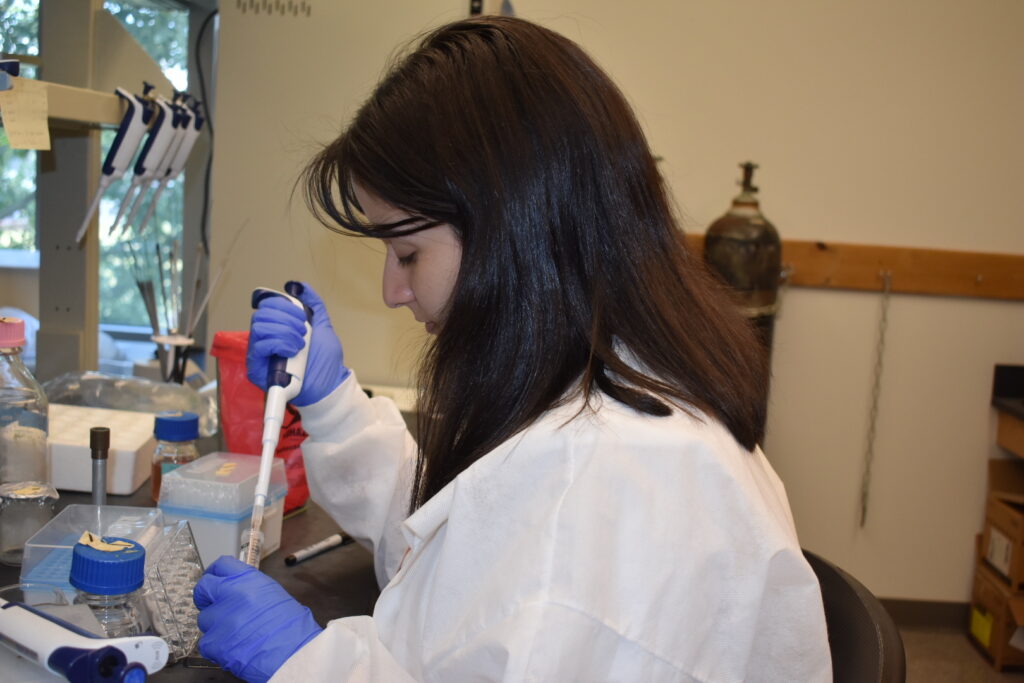
The use of vapes (electronic cigarettes) has been increasing significantly over the past decade, especially among adolescents. It is presumed that e-cigarette use is a safer alternative to traditional cigarettes, however, evidence suggests that they may be just as harmful. Therefore, the “big why” for this summer research is to show the effects of e-cigarettes, focusing on the oral cavity, and break those perceptions. My project aims to present the effects of vaping and in the case of my project, I explored the effects of the immune response. Specifically, I looked at how the activity of M1 immune cells is impacted when exposed to e-cigarettes. These cells are known for digesting unwanted bacteria, a process known as phagocytosis. Therefore, I am seeing how their effectiveness to do this process, against harmful bacteria in particular, is impacted when exposed to e-cigarettes. I also looked at how the expression of M1 genes involved in immune function changes after e-cigarette exposure. That being said, if this immune response is impacted, these findings would indicate that vaping has implications for macrophage responses against bacteria, leading to immune dysfunction.
What has summer research taught you about yourself and the field that you researched and/or studied?
This summer has shown me the many hidden sides of research that I did not know when doing research during the semester. It has shown me that research is not always perfect and there are going to be many obstacles along the way. This experience has taught me perseverance and the importance of adapting to unexpected challenges. These setbacks are an integral part of the scientific process and it allows one to learn and reflect which I think is valuable. I also learned how to work with others specifically as a mentor which helped enhance my collaborative and teaching skills. Lastly, this research opportunity has shown me that this is the field I want to go into and helped confirm that this is something I am really passionate about. Working in both the microbiology and immunology fields has shown me not only how important they are individually but also how they complement each other really well. This summer has also deepened my appreciation of the complexities and rigor of the scientific process and how much work and motivation it takes. It helped give me the behind-the-scenes of a published scientific paper and what it takes to reach that goal, which I hope to accomplish one day.
What advice would you give to students considering a future research opportunity similar to the one you participated in?
I would try to explore the types of research that Muhlenberg offers because there are so many different fields students can be a part of. Do not hesitate to ask questions and embrace the learning process! I would also tell them that research is not always straightforward and that there are going to be challenges along the way. Research is not perfect but opens opportunities for reflection. Therefore, perseverance and having a positive attitude are key to this experience.