The Big Problem at Little Cedar Creek
Ashtyn Curnow, Julian Pilet, Maya Richwine, Ava Lundy, Quentin Walker
Faculty Mentor: Dr. Iyengar
Other Research Team Members: Caprina Licopoli, Kemeria Barnett, and Angel Madrigal
What is the broader impact of your summer research? That is, why should the world care about your work?
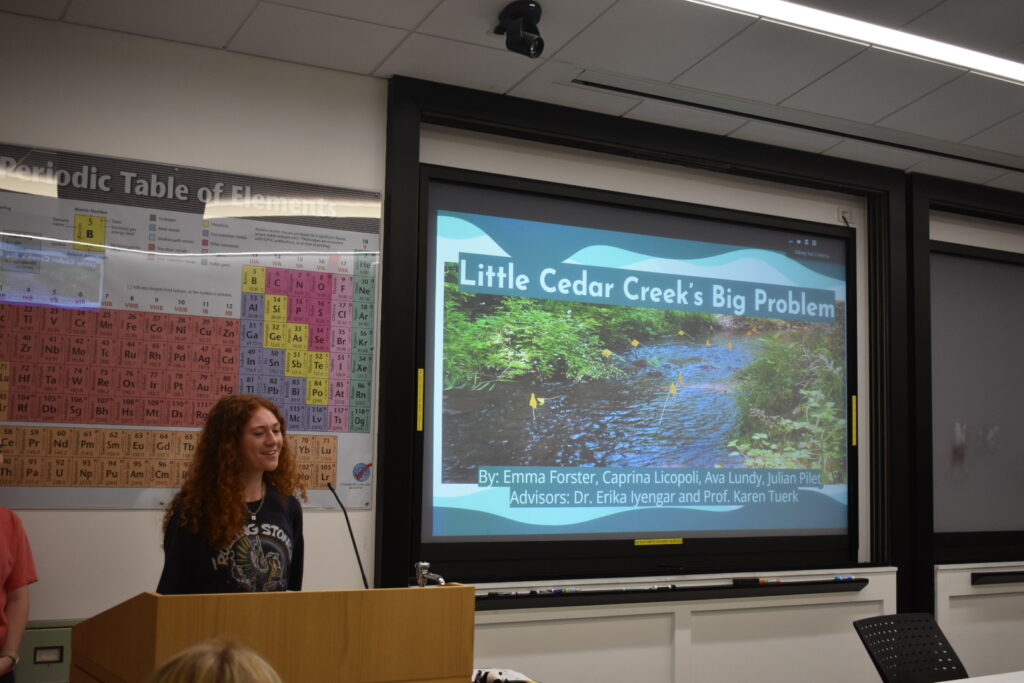
The “Big Why” of our project is to assess the health of local streams, like Little Cedar Creek, which are vital for drinking water and recreation. Many waterways in Allentown are becoming increasingly polluted, threatening aquatic life and posing health risks to humans, especially children. By evaluating stream health, we aim to ensure that these essential resources remain safe and usable despite growing pollution and urban development. The “little why” of our project is to assess the health of Little Cedar Creek by analyzing aquatic macroinvertebrates, such as mayflies, stoneflies, and caddisflies, which are indicators of stream health. This stream has been compromised, with sediment negatively impacting these organisms. By examining the presence of EPT species and the level of fine sediment, we can determine if the stream is impaired and whether action is needed. Since Little Cedar Creek flows into the Lehigh River, which supplies water to the Lehigh Valley, ensuring its health is crucial to prevent potential health risks to the local population.
What has summer research taught you about yourself and the field that you researched and/or studied?
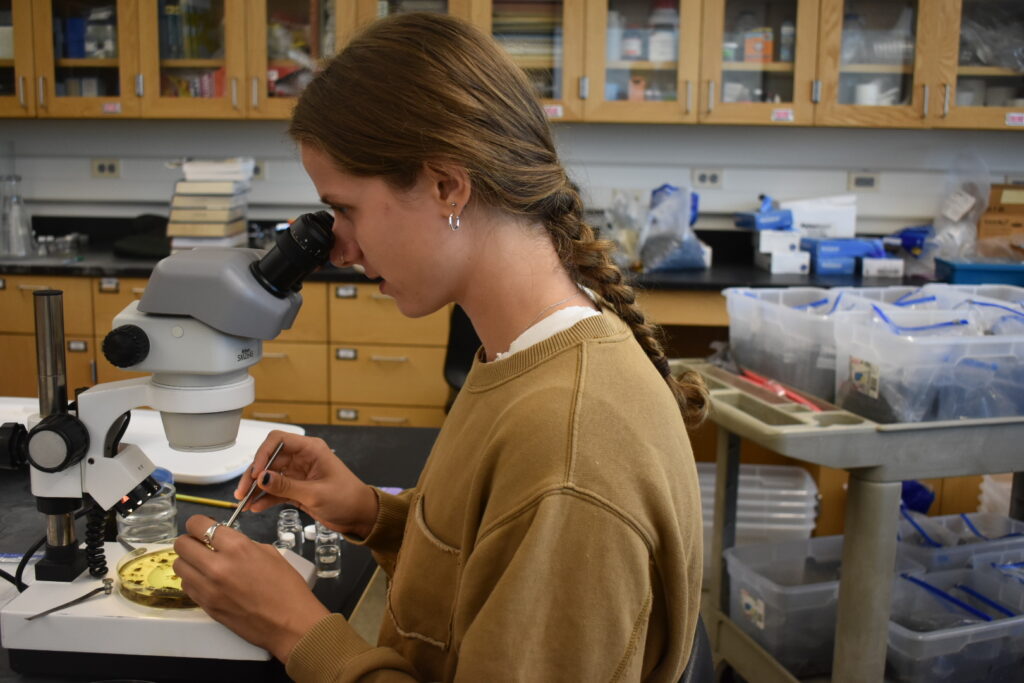
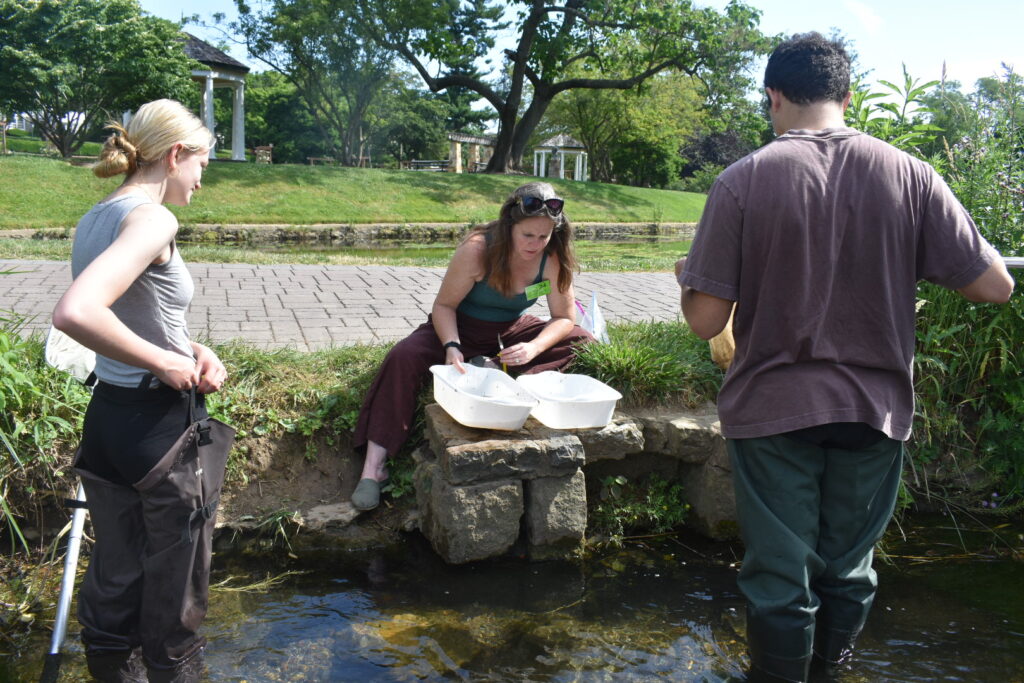
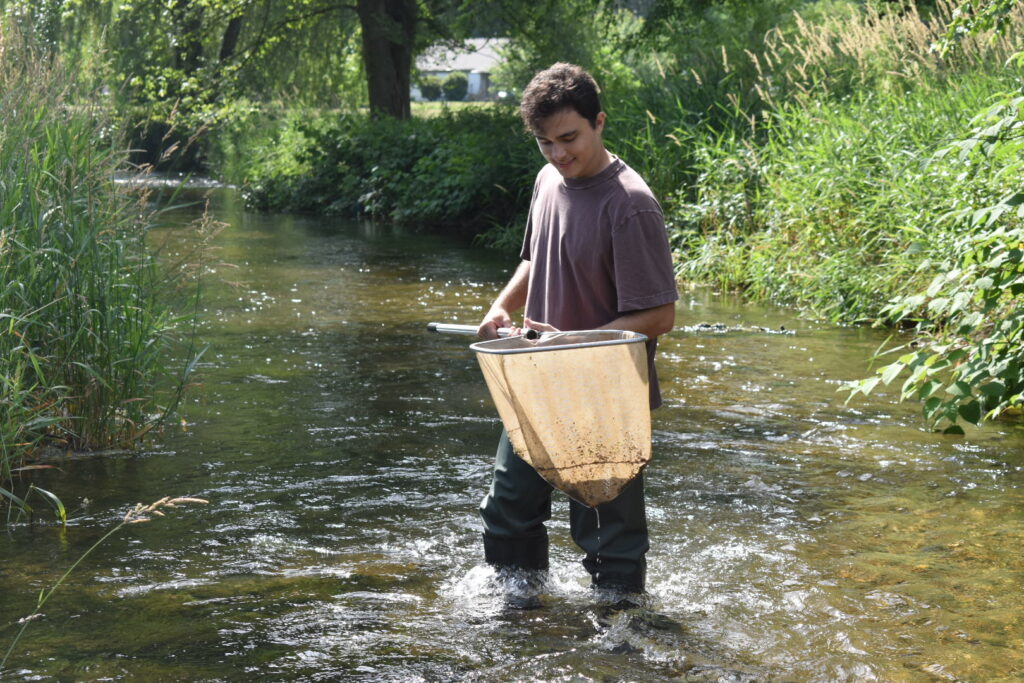
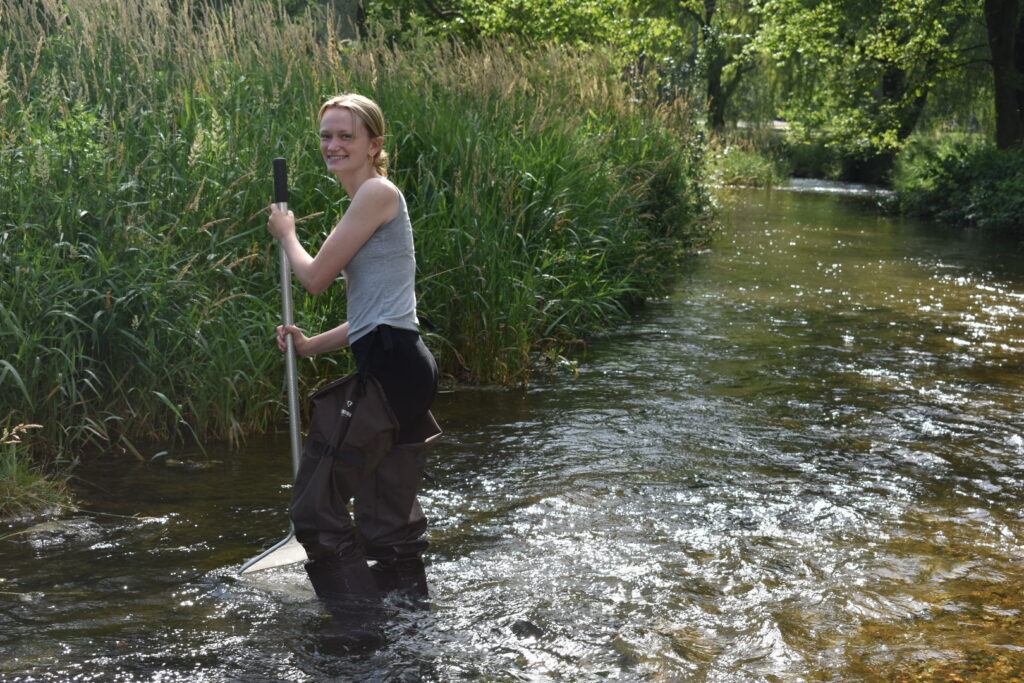
This summer has been a valuable learning experience, revealing both the challenges and rewards of research. We discovered that while research can be tedious, it’s also fulfilling and fun. We learned the importance of collecting substantial data to identify significant trends and adapt to unexpected setbacks. We gained skills in insect identification, using field equipment like kick nets, and analyzing data in the lab. Additionally, We realized that environmental science is more complex than anticipated, and became more interested in pursuing a career in this field. Overall, we improved our research and teamwork skills and learned how interconnected various aspects of the field are.
What advice would you give to students considering a future research opportunity similar to the one you participated in?
Research is a process that can be unexpected. You need to learn what does and does not work, all while expecting the worst and hoping for the best. The process is long and is never truly done. There is always more to discover.