In Vitro Analysis of Non-steroidal Anti-inflammatory Drug (NSAID) Derivatives for CNS Delivery
Avi Soussan and Andrew Gagnon
Faculty Mentor: Dr. Young
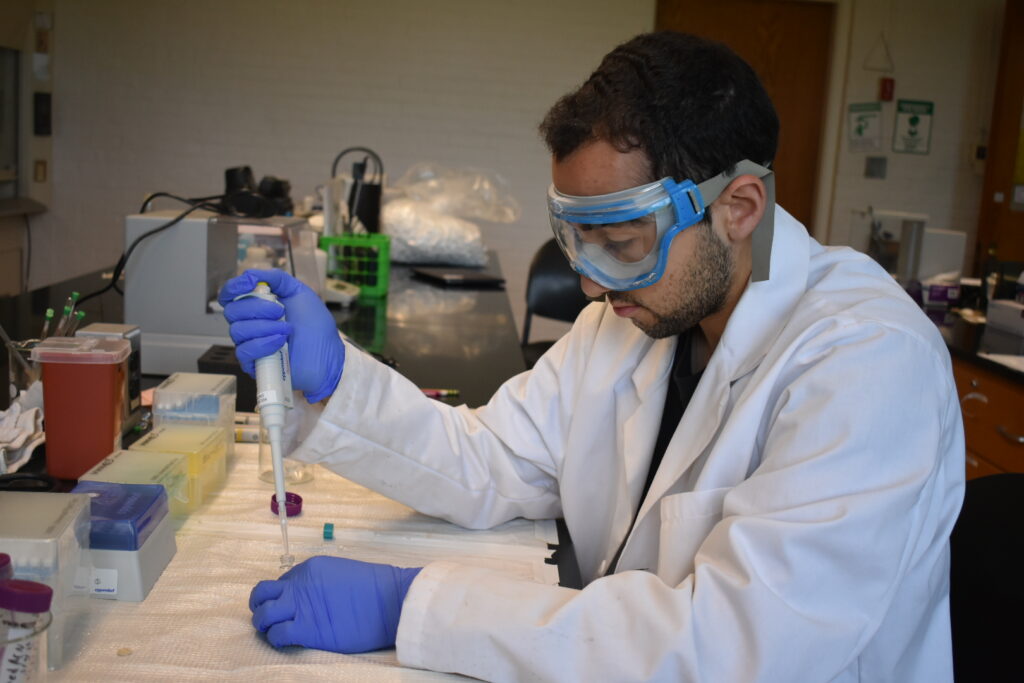
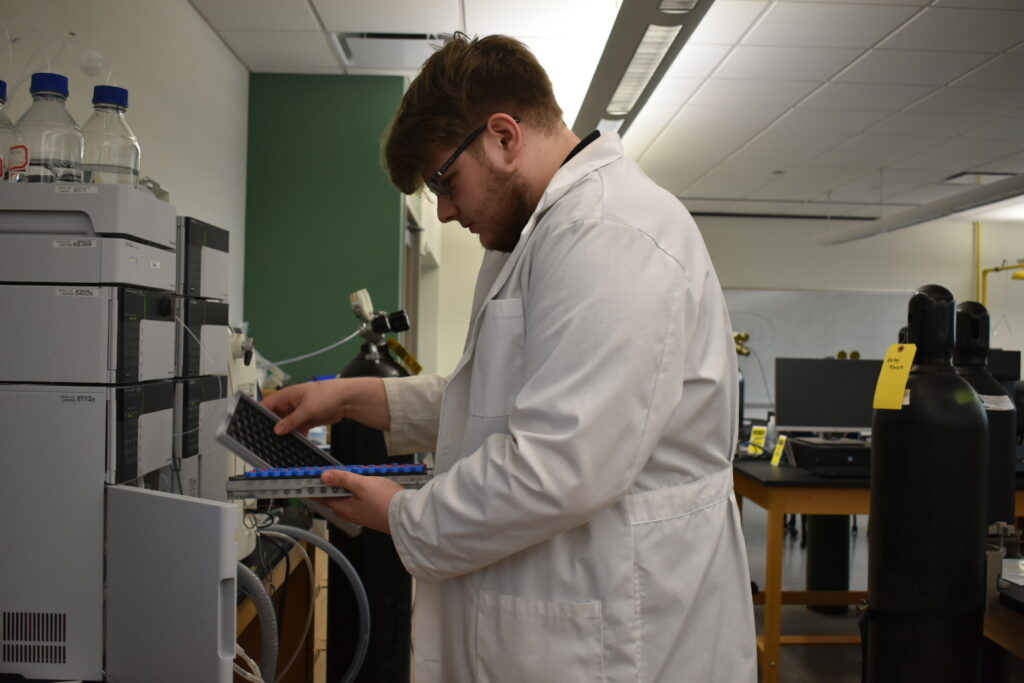
What is the broader impact of your summer research? That is, why should the world care about your work?
Alzheimer’s is a disease that affects millions of Americans worldwide and there are limited effective disease-modifying medications. Our research tries to find possible mechanisms to target and treat the disease. Non-steroidal anti-inflammatory drugs (NSAIDs) have the potential to be powerful therapeutic options for Alzheimer’s disease, but they have had limited clinical success due to their inability to pass through the blood-brain barrier. Using conjugated NSAIDs (an NSAID with a shuttle attached to the molecule) could be a possible way to increase brain bioavailability.
What has summer research taught you about yourself and the field that you researched and/or studied?
I learned a great deal of perseverance during the research process. We had several setbacks and challenges due to instrumentation issues and unexpected results; however, I learned to overcome these challenges and push through them. I also learned about independence. Much of the work this summer was independent, enabling me to learn how to use my resources on my own. Through the summer experience, I learned how to operate an HPLC. I had never used this instrument before this summer, and now I have gained a lot of experience using it. I also learned about keeping an organized and detailed notebook to track the research process.
What advice would you give to students considering a future research opportunity similar to the one you participated in?
I would highly encourage them to take part in research. Research is a challenging process. I often learned that things may not turn out how you expected. You might fail the first time. Maybe the second time. Maybe even the tenth time. In the end, you can overcome the challenges and accomplish much more than you might have expected.