Attempting to Identify Central Coordinating Tissue For Endocrine Signaling in C. elegans Using Tissue-Specific Protein Degradation
Sydney Vogel ’25
Faculty Mentor: Bruce Wightman
Other Research Team Members: Ashley Kim, Pamala Najm, Alyssa Sipman, and Benjamin Mulford
What is the broader impact of your summer research? That is, why should the world care about your work?
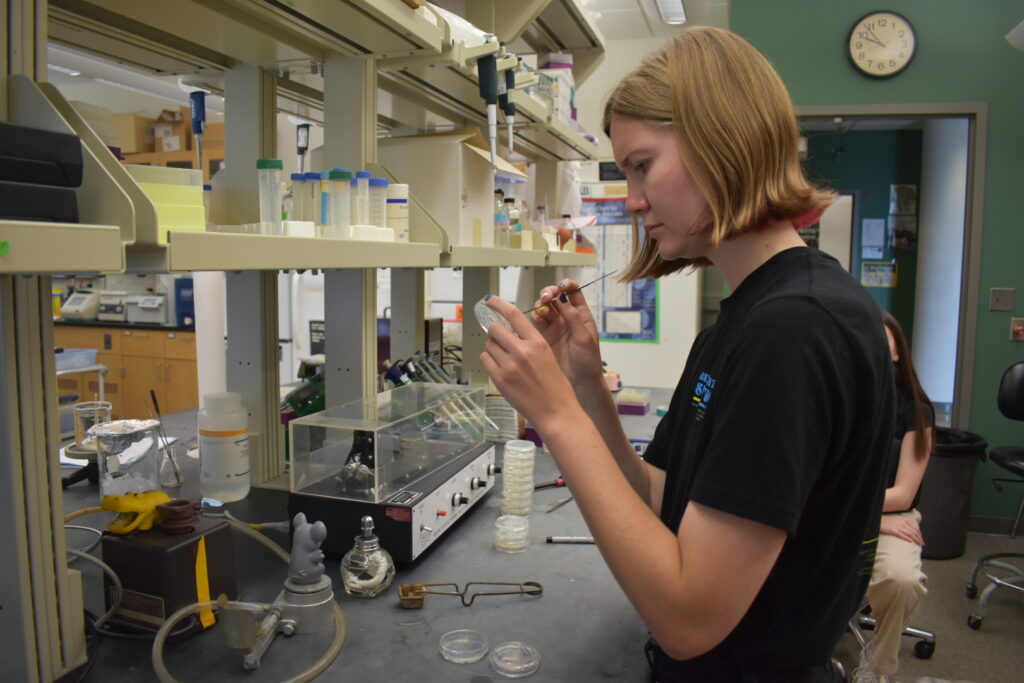
The broader goal was to investigate what genes and biological processes are involved in the process of developmental arrest in C. elegans, and how do the wide variety of involved variables affect the developmental arrest phenotype when altered? I used tissue-specific protein degradation targeting the insulin receptor DAF-2, with the intention of hopefully identifying a tissue responsible for the endocrine signaling coordination that is necessary for developmental progression.
What has summer research taught you about yourself and the field that you researched and/or studied?
This summer has reinforced my genuine passion for scientific research, and informed me that I would love to continue pursuing scientific research full time in a professional capacity. I also learned how to more efficiently self-regulate my work schedule. This summer taught me how full time biological research operates, how to schedule your experimental plans around the life cycle of a living organism, and how to “go with the flow” as organisms don’t always act according to your plans.
What advice would you give to students considering a future research opportunity similar to the one you participated in?
I would tell future students to expect a steep learning curve, and to not be afraid to ask questions from both professors and your peers. Everyone is learning, and actively participating is the best way to make sure you learn as much as possible.